Starting a small herb garden indoors is a rewarding way to bring fresh flavors to your cooking and add a touch of green to your living space. Whether you have a sunny windowsill or a small corner, growing herbs inside is easier than you might think. This guide will walk you through the essentials, from choosing the right herbs to caring for them daily.
Why Grow Herbs Indoors?
Indoor herb gardens offer several benefits:
– Fresh herbs available anytime
– Saves money on store-bought herbs
– Enhances your home’s air quality
– Adds natural decor to your kitchen or living area
– Fun and educational gardening experience
Choosing the Right Herbs for Indoor Growing
Not all herbs thrive indoors, so start with ones known to grow well inside:
– Basil: Needs plenty of light and warmth.
– Parsley: Tolerates moderate light, grows well in pots.
– Mint: Easy to grow but can spread quickly; keep it confined.
– Chives: Require moderate light and regular watering.
– Thyme: Prefers sunny spots with well-drained soil.
– Cilantro: Likes cooler temps and bright indirect light.
– Oregano: Needs good sunlight and less frequent watering.
Choose herbs you use most often in your cooking to maximize enjoyment.
Selecting Containers and Soil
Containers
Choose pots with drainage holes to prevent waterlogging. Containers can be:
– Traditional clay or ceramic pots
– Recycled containers like mason jars or tin cans (just add drainage holes)
– Indoor planting kits with built-in trays
Size matters — start with 4-6 inch pots for most herbs.
Soil
Use a high-quality potting mix formulated for indoor plants. Avoid garden soil, which may be too heavy and contain pests. Look for soil mixes with:
– Good drainage
– Light texture
– Nutrient-rich components
You can also mix in some perlite or sand to improve drainage.
Finding the Right Spot and Light
Herbs generally need 6-8 hours of light daily. Here are options:
– Sunny windowsill: South or southwest-facing windows provide the best light.
– Under grow lights: If natural light is limited, use LED grow lights designed for plants.
– Rotating plants: Turn pots regularly for even light exposure.
Keep herbs away from drafts and heating vents, as temperature fluctuations can stress plants.
Planting Your Herbs
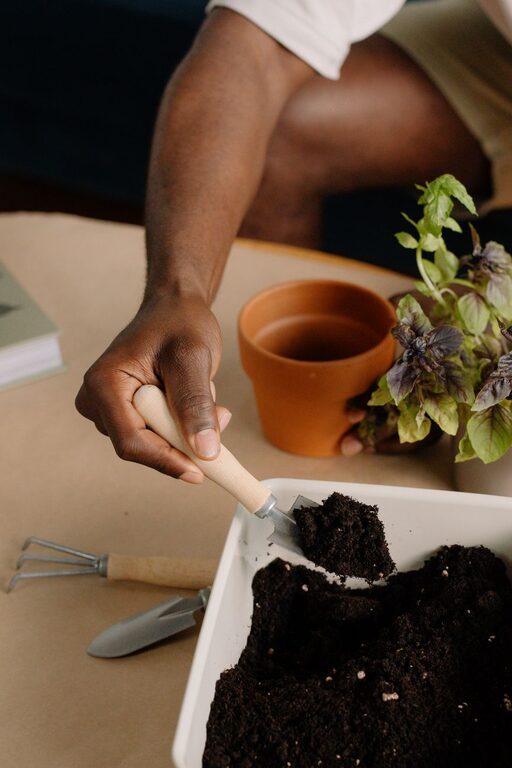
You can start your herb garden from seeds or young plants (seedlings).
Starting from Seeds
– Fill pots with potting mix.
– Plant seeds according to packet instructions (usually a shallow depth).
– Water gently to moisten soil.
– Cover with a plastic dome or plastic wrap to retain moisture until seeds sprout.
– Remove cover once seedlings appear.
Starting from Seedlings
– Gently remove seedlings from their nursery containers.
– Plant them in your pots at the same depth they were growing.
– Water well and place in appropriate light.
Watering and Care Tips
– Water when the top inch of soil feels dry.
– Avoid overwatering — soggy soil can cause root rot.
– Mist herbs occasionally to increase humidity.
– Use a balanced, water-soluble fertilizer every 4-6 weeks.
– Pinch off flower buds to encourage bushier growth and prolong harvesting.
Harvesting Your Herbs
Harvest herbs regularly to keep them healthy and productive:
– Use clean scissors or your fingers to snip leaves.
– Harvest in the morning for best flavor.
– Avoid cutting more than one-third of the plant at a time.
– Wash herbs before use, but store dry in the refrigerator if not using immediately.
Common Challenges and Solutions
| Problem | Cause | Solution |
|——————|——————————–|————————————————–|
| Leggy, thin stems| Lack of light | Move to brighter spot or use grow lights |
| Yellow leaves | Overwatering or poor drainage | Let soil dry out, check drainage holes |
| Wilting | Underwatering or heat stress | Water thoroughly, keep away from drafts/vents |
| Lack of growth | Nutrient deficiency | Feed with balanced fertilizer |
| Pests (e.g., aphids) | Overcrowding or poor ventilation | Isolate plant, clean leaves, use safe pest treatments |
Tips for Success
– Start with a few easy herbs to build confidence.
– Keep a small notebook to track watering and growth.
– Rotate plants weekly for even light exposure.
– Use decorative pots to brighten your kitchen or living area.
– Experiment with herb combinations for cooking.
Conclusion
Growing a small herb garden indoors is a simple, enjoyable way to bring fresh ingredients and greenery into your home. With the right choice of herbs, containers, light, and care, you can cultivate a thriving garden that perks up your meals and your mood. Happy gardening!
About the Author